
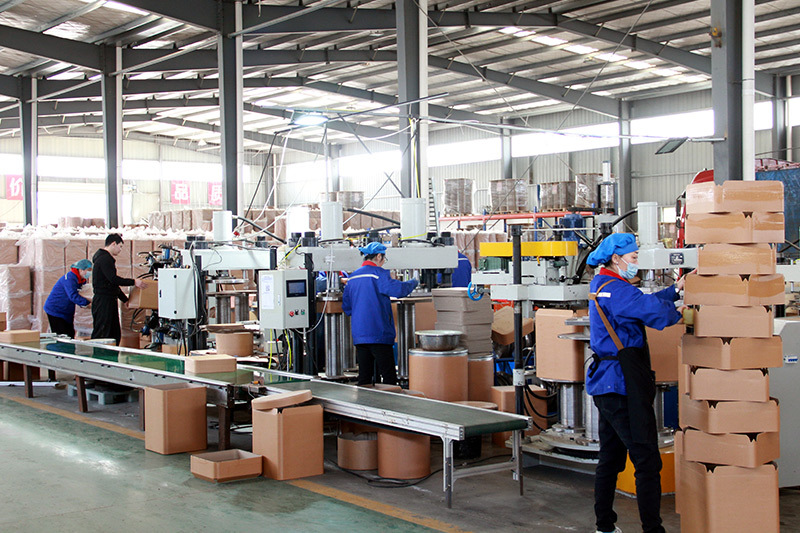
Production Process
Standardized Workflow for Quality Assurance
PROCESS
Iron箍 barrel
Iron‑hooped cardboard drums, also known as fiber drums or cardboard drums, are cylindrical packaging containers made by winding multiple layers of kraft paper or cardboard and fitted with metal (iron/steel) hoops and lids at both ends. Their design and material composition give them unique practical value across a wide range of applications.
Main Applications (Categorized by Industry and Use)
Iron‑hooped cardboard drums are highly versatile, covering virtually all sectors that require the storage and transportation of dry, granular, or powdered materials.
I. The Industrial and Chemical Sectors (This is the largest application area)
Chemical raw materials: Powdered and granular dyes, pigments, coatings, resins, additives, catalysts, and the like.
Pharmaceutical and Food Ingredients: Pharmaceutical intermediates, food additives (such as vitamins, flavorings, and saccharin), and dried food ingredients, among others.
Minerals and Building Materials: Talc powder, mica powder, bentonite, refractory materials, and others.
II. Food Industry
Bulk dry goods: Tea leaves, coffee beans, seeds, nuts, dehydrated vegetables, and potato chips/french fries (used as shipping pallets).
Food additives: As mentioned earlier, it is used for packaging raw materials.
Specialty Food Packaging: Commonly used for gift packaging, such as premium mooncakes, candies, and cookies, with beautifully printed exteriors.
III. Special and High-Value Items
Explosives: Specially designed explosion-proof cardboard drums are used for the safe packaging of fireworks, gunpowder, and similar materials, ensuring both safety and ease of disposal.
Aerospace: Used for packaging certain special materials or components.
Electronic products: An antistatic version for packaging small precision instruments and electronic components.
IV. Everyday and General Domains
Sports equipment: Packaging golf balls, badminton shuttlecocks, table tennis balls, and more.
Stationery and Toys: Packaging for puzzles, building blocks, crayons, and chalk.
Consumer goods: As outer packaging for products such as laundry detergent, cat litter, and salt.
Comparative advantages over similar packaging
Compared with all‑steel or plastic drums: it is more cost‑effective, lighter in weight, more environmentally friendly, free from rust, and easier to dispose of at end‑of‑life.
It has slightly lower impact resistance, but this is sufficient to meet the logistics needs of most dry goods.
Compared with plain paper bags/woven bags: High strength, excellent rigidity, superior moisture and leak resistance, neat and stable stacking, and a cleaner, more premium appearance—all delivering enhanced overall protection.
Compared with wooden crates or barrels: they are lighter in weight, more affordable, free from pest infestations and mold, manufactured to a high degree of standardization, and pose no risk of wood splinters.
The core value of iron‑hooped cardboard drums lies in their outstanding cost‑effectiveness and well‑balanced performance: It delivers protective performance comparable to rigid containers at a relatively low cost, while also offering the rigidity and stacking stability that flexible packaging lacks. This “rigid‑flexible” packaging solution is particularly well suited for the storage and transportation of dry, powdered, and granular products that require a degree of structural integrity, moisture and dust resistance, yet are subject to stringent cost and environmental‑sustainability requirements. As environmental regulations tighten and consumer awareness of sustainability grows, the prospects for this type of packaging—made primarily from renewable resources—are set to expand even further.
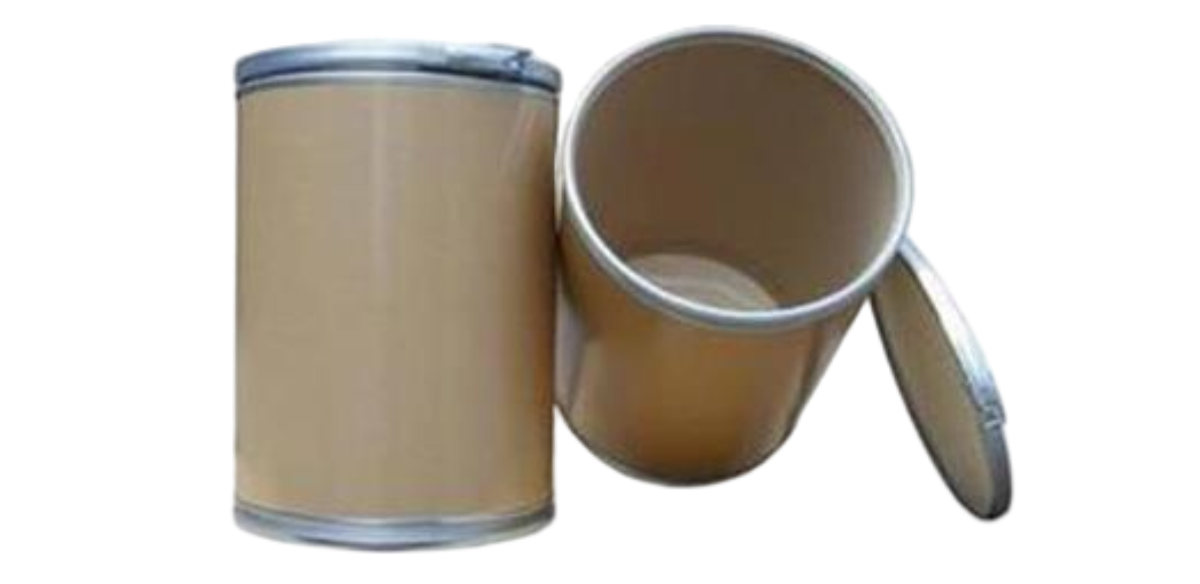
The main components of iron‑hoop barrel materials are: paper (such as kraft paper and tube paper), galvanized steel strip, bottom and lid plates (made of wood, plywood, etc.), handles (plastic inserts, metal locking tabs, etc.), and adhesives (polyvinyl alcohol glue, starch glue).
In addition, depending on production requirements, the barrel surface may undergo processes such as lettering, color printing and packaging, hole punching, bagging, and the application of special bottom caps.
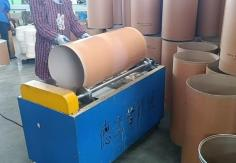
Process 1: Barrel Rolling (Automatic Rolling Machine)
Processing range |
Production Capacity (8 hours) |
Operator |
Land area |
Power consumption |
280~650mm |
900–1,200 pieces |
1 person |
2.4m×4.2m |
10.5KW |
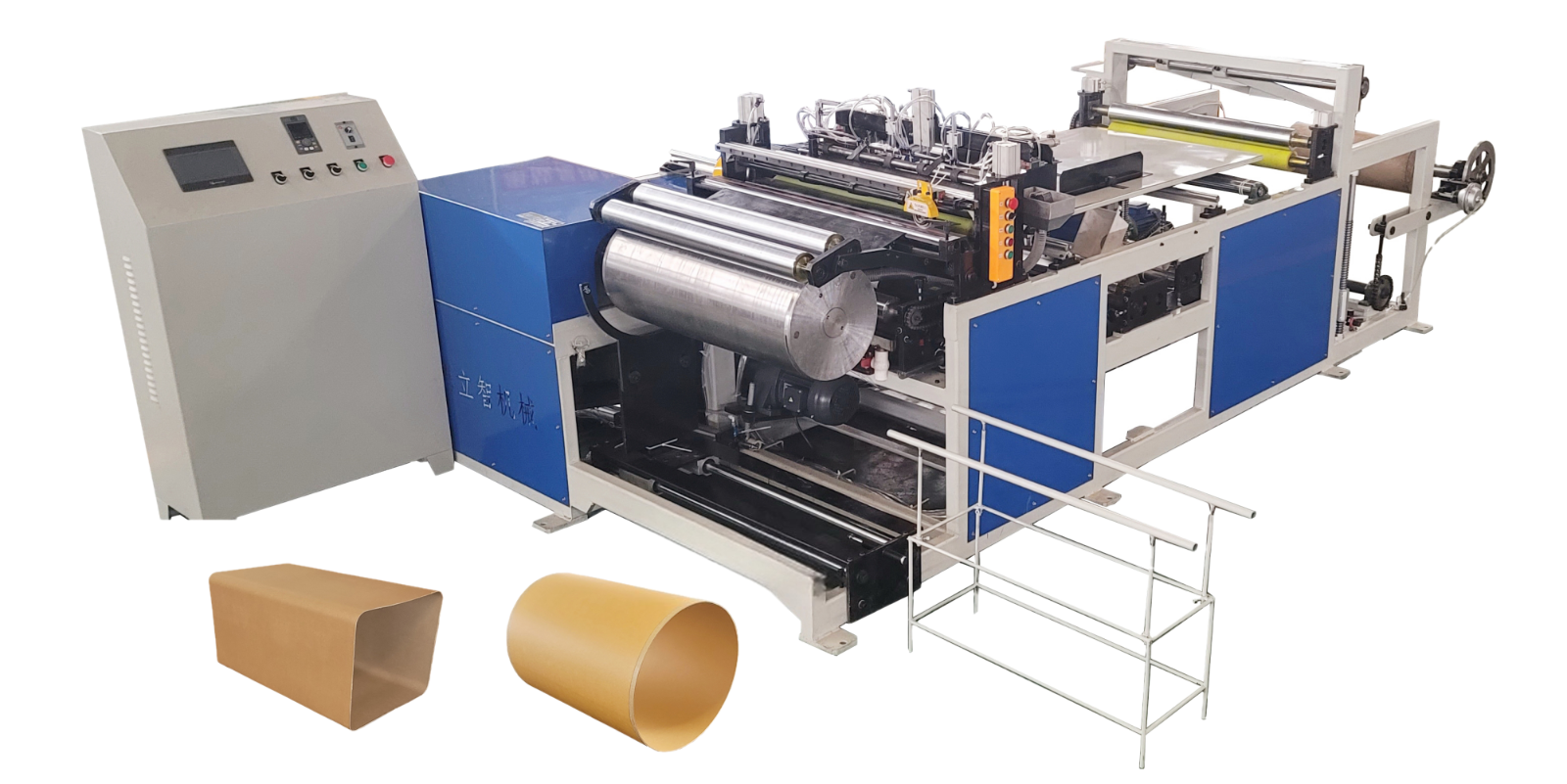
1.2 Issue materials according to work orders and perform self-inspection on incoming materials;
1.2.1 Paper grades (A/B/C);
1.2.2 Paper height range (upper deviation 0–3 mm);
1.2.3 Veneer paper (according to specifications);
Bucket specification Ø |
280 |
300 |
320 |
340 |
350 |
365 |
370 |
380 |
400 |
420 |
430 |
440 |
450 |
480 |
500 |
550 |
Veneer paper length mm |
960 |
1000 |
1040 |
1160 |
1160 |
1160 |
1240 |
1240 |
1330 |
1420 |
1460 |
1460 |
1510 |
1550 |
|
|
Veneer paper height mm |
The tissue paper height must not be less than 20 mm below the roll core height. |
|||||||||||||||
1.2.4 Iron hoop‑wrapped barrel (outer circumference);
Bucket specification Ø |
300 |
320 |
340 |
350 |
365 |
370 |
380 |
400 |
420 |
430 |
440 |
450 |
480 |
500 |
550 |
Outer length mm |
960 |
1027 |
1090 |
1121 |
1167 |
1184 |
1215 |
1278 |
1342 |
1372 |
1405 |
1437 |
1550 |
1592 |
1757 |
1.2.5 Roll bucket height;
Barrel body of the iron hoop barrel (Ø/mm) |
Note |
|
300~450 |
480 or above |
Original paper height: The added height is 5 mm less, with an upper deviation of 0–3 mm. |
+30 |
+35 |
|
1.2.6 Production orders requiring weight must be weighed according to the specified requirements (note that wet buckets include the weight of added water).
1.2.7 The diameter of the paper core must be matched to the downstream production process, taking into account the shrinkage of the paper core.
Process Step 2: Cutting and edging the upper and lower iron hoops (using a laser welding machine);
Processing range |
Production Capacity (8 hours) |
Operator |
Gross floor area |
Power consumption |
270–550 mm |
Below 400 mm ~3,800 units |
0 people |
1.3m×2m |
6KW |
400mm and above ~3,500 units |
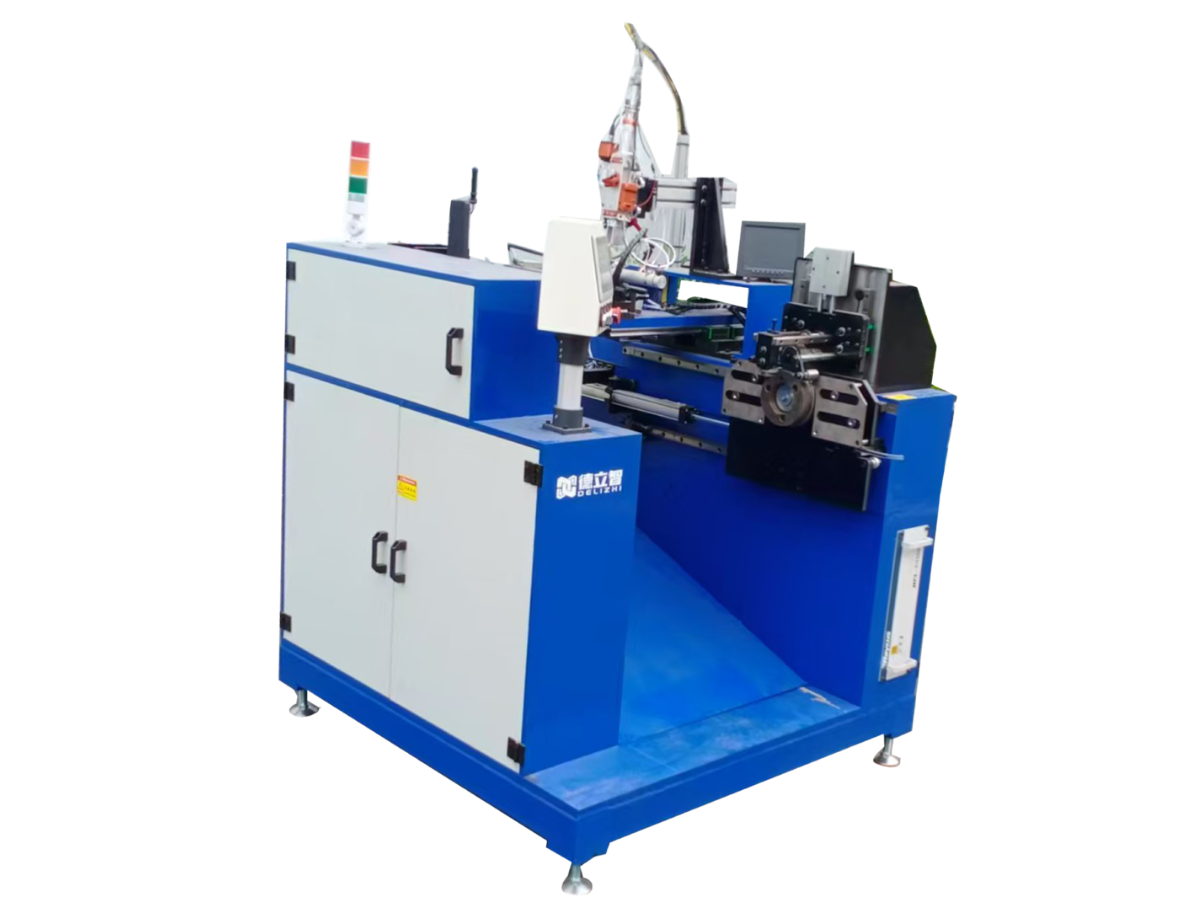
2.1.8 Laser welding machine cutting dimension parameters:
Specifications |
300 |
320 |
340 |
350 |
365 |
370 |
380 |
400 |
420 |
430 |
440 |
450 |
500 |
550 |
Length mm |
963 |
1024 |
1088 |
1118 |
1168 |
1182 |
1215 |
1278 |
1339 |
1373 |
1401 |
1433 |
1593 |
1753 |
2.1 Strip steel thickness: 0.4 mm to 0.6 mm;
2.2 The cut-to-length dimensions shall be coordinated with the production of the coiled drums.
Process Step 3: Rolling grooves on the upper and lower iron hoops (using a edge-rolling machine):
Processing range |
Production Capacity (8 hours) |
Operator |
Gross floor area |
Power consumption |
280~650mm |
1,000 to 1,200 pieces |
1 person |
2M*2.9M |
7.5KW |
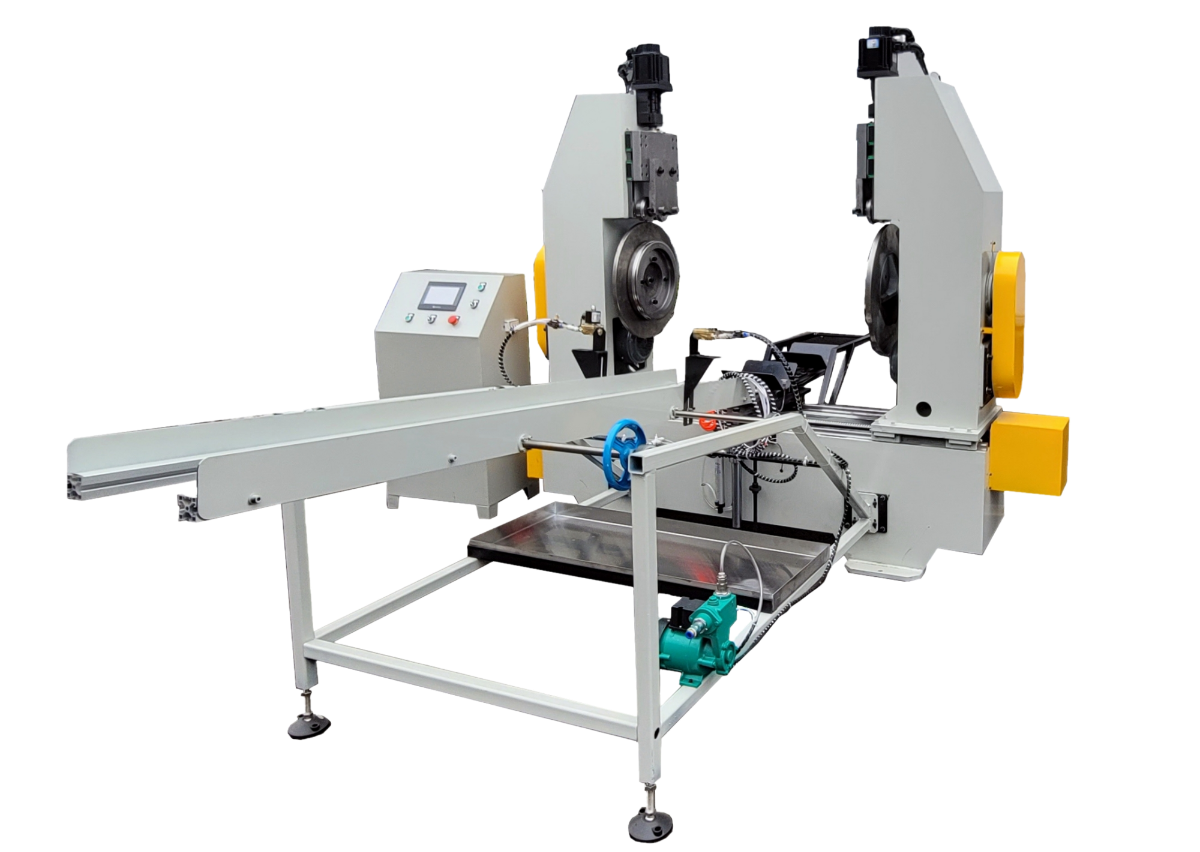
3.1 Issue materials according to the work order, inspect incoming materials, and verify that the metal hoops show no rust or weld failure, that the paper drums are free from tears or damage, and that the hoop circumference is properly matched to the drum’s outer diameter.
3.2 The first‑piece production shall be conducted as a single run, with inspection of the first paper drum produced, including verification of groove depth (in coordination with subsequent processes), assessment of the uniformity of the metal hoop’s appearance, and checking for fraying or wrinkling. Additionally, the inner wall of the drum shall be inspected for cracks.
Process Step Four: Sealing the bucket opening and bottom (using a bottom-sealing machine);
Processing range |
Production Capacity (8 hours) |
Operator |
Gross floor area |
Power consumption |
280~650mm |
1,000 to 1,200 pieces |
1 person |
2M*3.5M |
7KW |
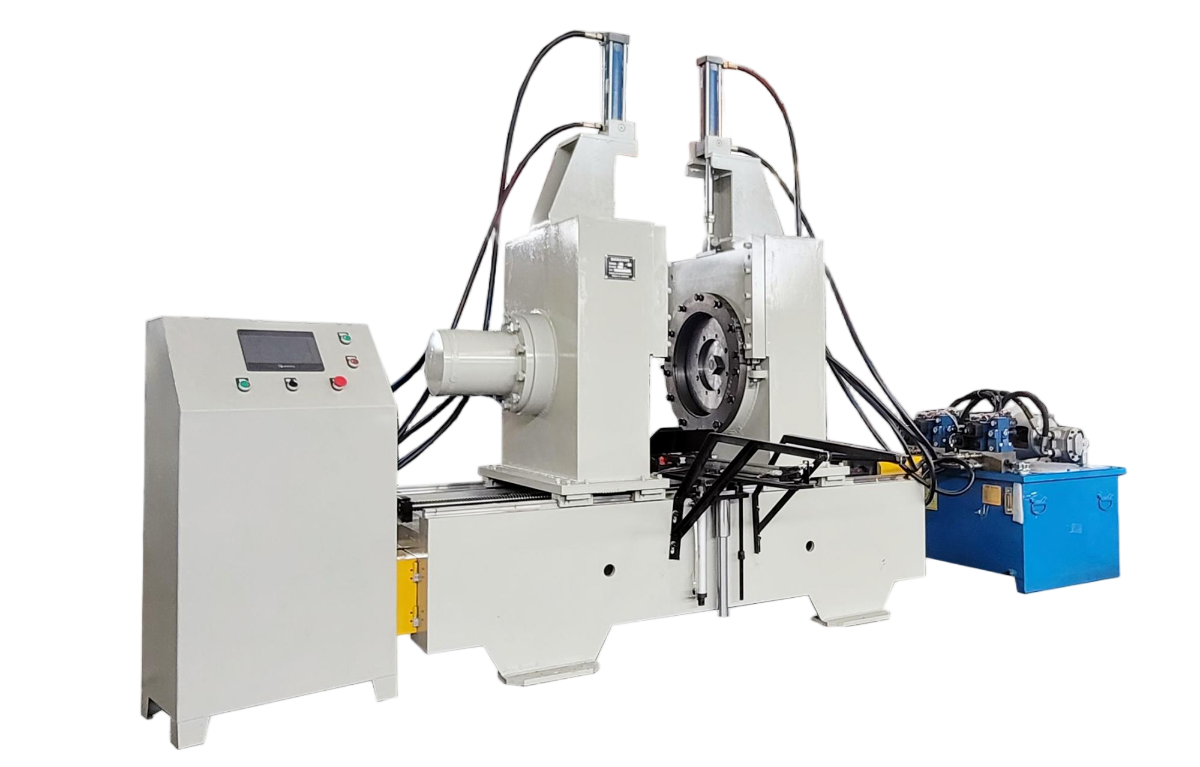
4.1 Incoming Material Self-Inspection: Verify that the base plate thickness and outer diameter meet specifications, inspect the paper drum’s exterior and inner wall for tears or contaminants, and measure the height of the paper drum after grooving.
4.2 Verify that the paper and backing board comply with the production process requirements.
4.3 The first production barrel shall be inspected individually, with self‑inspection conducted in sequence for the barrel’s height, the appearance of the iron hoop, and the tightness of the barrel bottom (barrel height + lid = standard height ± 3 mm).
Process Step 5: Cutting the clamping hoop (cover) blanks (using a hoop‑cutting machine);
Processing range |
Production Capacity (8 hours) |
Operator |
Gross floor area |
Power consumption |
280~650mm |
2,800 units/8 hours |
0 people |
1.8m×4.3m |
3KW |
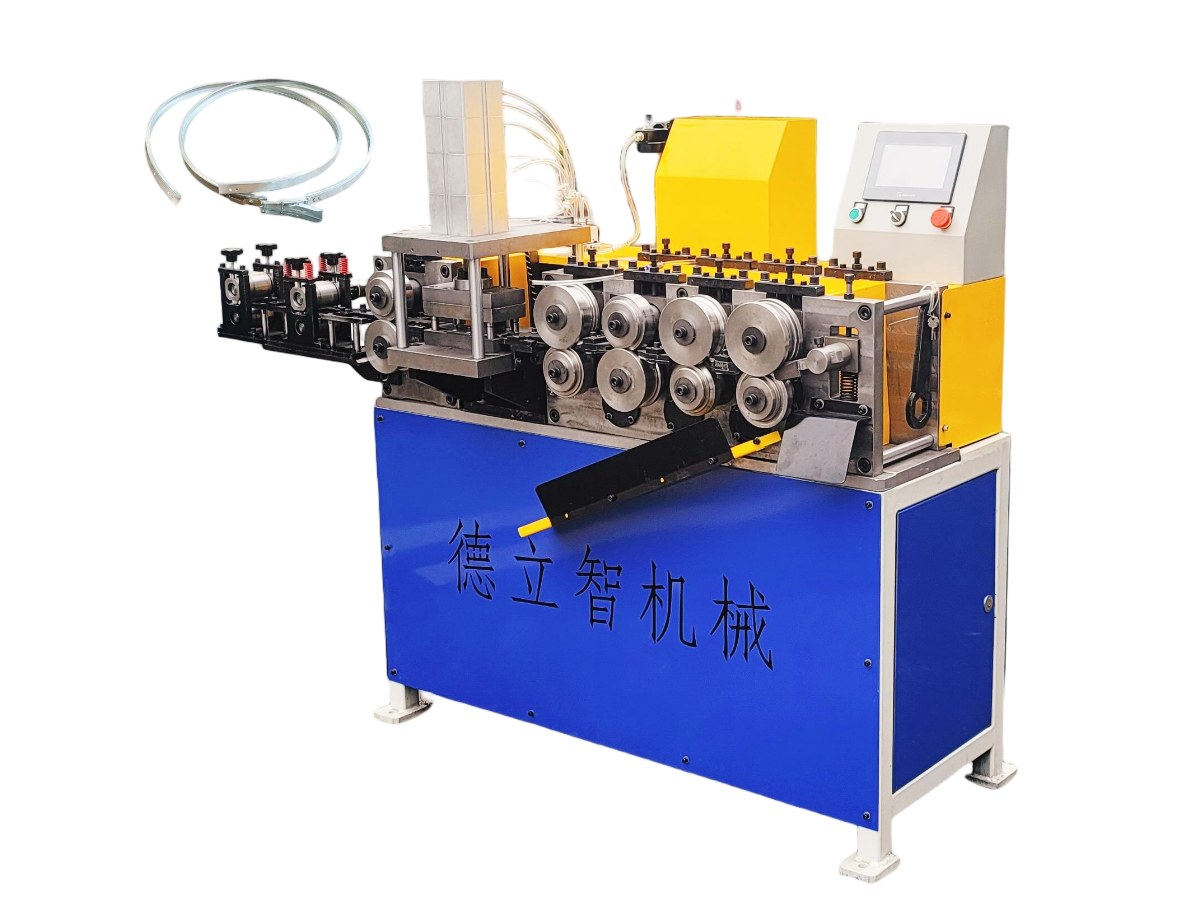
5.1 Incoming material self-inspection: verify strip steel thickness and width, and inspect for surface rust.
5.2 Perform first‑article inspection on the clamping hoops produced in the first batch, coordinating with the spot‑welding (or riveting) process: install them onto the paper drum opening and verify the appropriate tightness; inspect the appearance for fraying, and check that the edges are free of twisting or deformation, as well as ensuring that the punched holes are straight and properly aligned.
5.3 Pay attention to the cooling conditions during production;
5.4 The production process generates substantial amounts of steel slag; ensure timely cleaning and maintenance after each use.
Process Step Six: The single‑piece riveting machine is used to rivet the sealing ring wrench.
Technical Specifications: Model: MDJ-3T
Pneumatic speed: 30–60 pieces per minute
Power: 220V/50Hz/Three-phase four-wire system
Machine weight: 165 kg
Dimensions: 600 x 600 x 180 mm
Process Seven: Painting Machine
Used for brushing waterproof oil onto the surface of paper tubes.
Dimensions (L×W×H): 1200 mm × 600 mm × 780 mm; Weight: 120 kg
Power: 750W
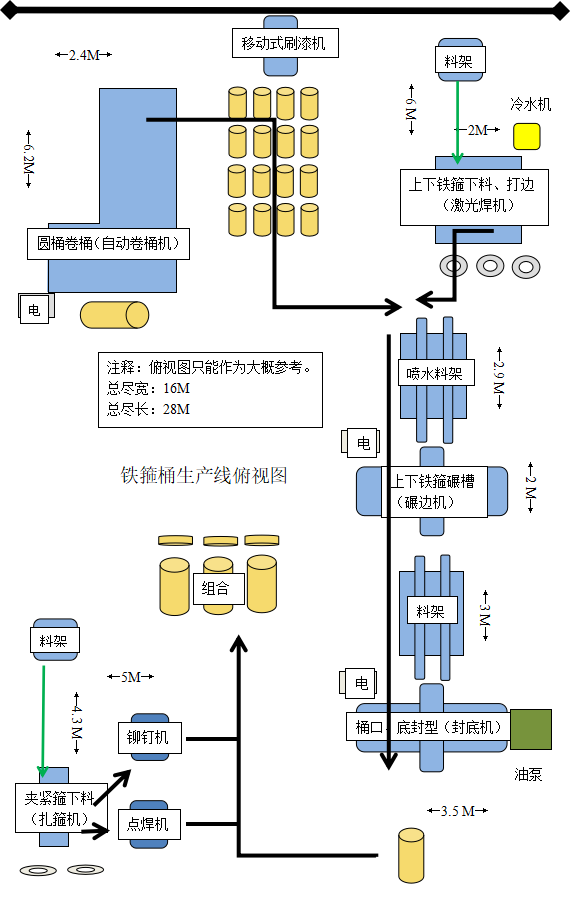
Scope, Content, and Design Parameters of the Iron-Clad Barrel Production Line
Total land area ( square meter ) |
Hydraulic oil (liters) |
Total power demand ( kilowatt ) |
Pressure standard ( megapascal ) |
Output value (large, small) |
Number of people |
Cable wire |
448 sq m |
170 liters |
34KW |
0.5 MPa~0.9 MPa |
1,000–1,200 units/8 hours |
5 people |
National Standard 4 mm² (4-core) |
Production Process and Requirements for Iron-Hoop Barrels
Specifications |
400×500 |
Roller height |
535 |
Mold dimensions |
phi 400 |
|
Facial tissue |
Edge rolling height |
Back cover height |
Number of floors |
Thickness |
Baseplate dimensions |
Cover plate dimensions |
480*1330 |
535 |
490 |
7.5 |
2.8 |
398 |
408 |

Trust comes from quality, and we live up to expectations
dedicated to the development and innovation of new products and technologies. The company can provide customized products and services according to the specific needs of customers.
Contact Us
Whatsapp: +8618661767871
E-mail: victorbusiness@foxmail.com
E-mail: victorbusiness@foxmail.com
SHARE


